How to Write a Novel With AI Without Losing Your Voice
Most AI writing tools produce generic, soulless text. Here's how to use AI as a creative partner — without sacrificing the voice that makes your story yours.

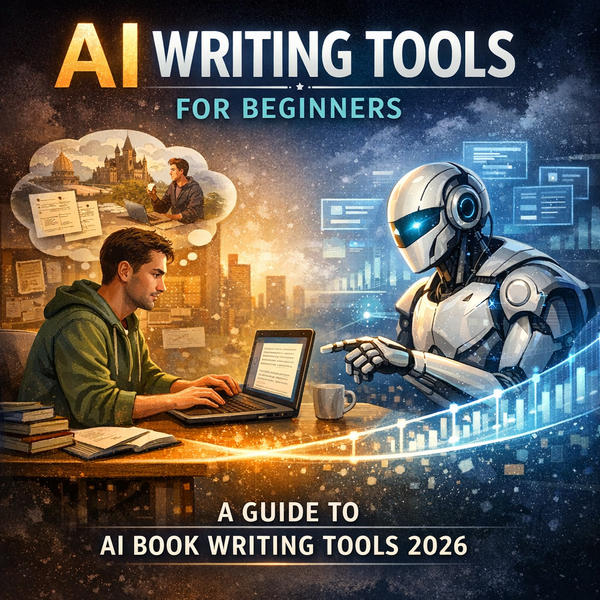
The promise of AI-assisted fiction writing is intoxicating: faster drafts, fewer blank-page moments, and a tireless brainstorming partner available at 2 a.m. But if you've ever pasted AI-generated prose into your manuscript, you've probably felt that sinking feeling — this doesn't sound like me.
You're not alone. The biggest complaint fiction authors have about AI writing tools isn't that the AI is bad at writing. It's that the AI is bad at writing like them.
The good news? It doesn't have to be that way. The problem isn't AI itself — it's how most tools use it.
The Real Problem: Context Amnesia
Here's what typically happens when writers use general-purpose AI tools like ChatGPT or Claude to help with their novel:
- You give the AI a prompt: "Write a scene where Marcus confronts his father."
- The AI produces something competent but generic.
- You tweak the prompt, adding details about Marcus's personality, the father's backstory, the tone you're going for.
- The AI does better — for that one scene.
- Next chapter, you start from scratch. The AI has forgotten everything.
This is context amnesia, and it's the fundamental flaw of using general-purpose chatbots for novel writing. Every conversation is a blank slate. Every scene requires you to re-explain your world, your characters, and your style.
No wonder the output sounds generic — the AI literally doesn't know your story.
What "Knowing Your Story" Actually Means
When a human co-author or editor works with you, they carry a mental model of your entire project:
- Your characters — their voices, motivations, contradictions, and relationships
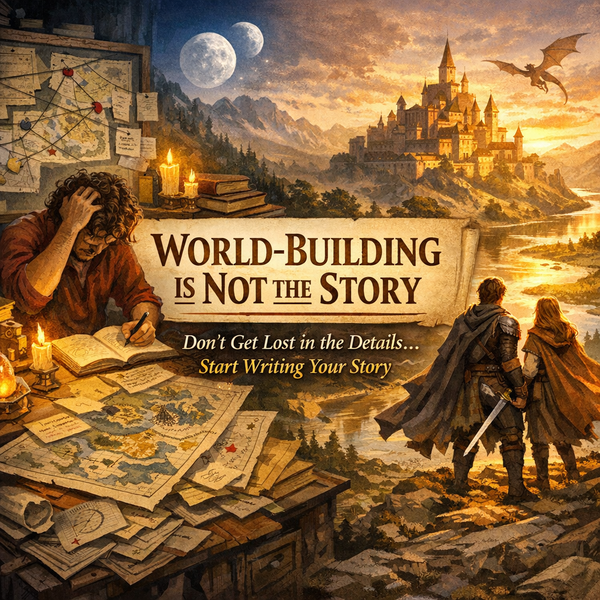
- Your world — the rules, geography, culture, and internal logic of your setting
- Your style — sentence rhythm, vocabulary choices, POV tendencies, how you handle dialogue vs. description
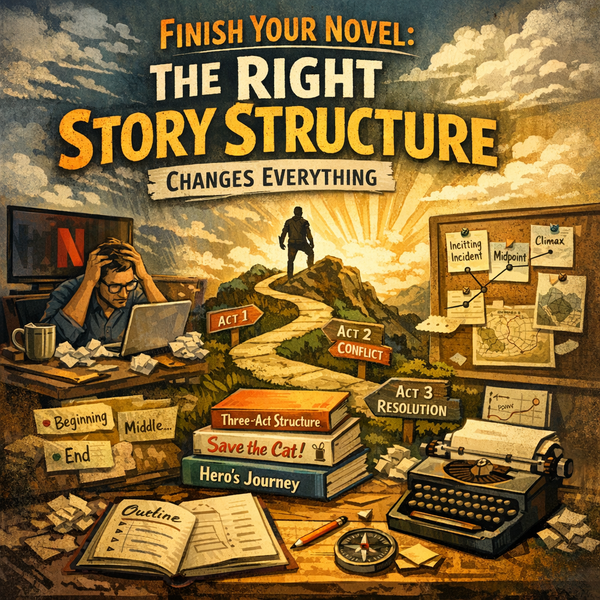
- Your structure — where you are in the narrative arc, what's been set up, what needs payoff
This mental model is what makes collaboration feel natural. An AI writing partner needs the same thing — but most tools don't provide it.
The Story Bible Approach
Professional TV writers have used "story bibles" for decades. A story bible is a living reference document that captures everything about a fictional world: character profiles, setting details, plot threads, thematic notes, style guidelines, and more.
The concept is simple: externalize your story's DNA so that anyone (or any AI) can stay consistent with it.
When AI tools integrate a story bible into every operation — not just as optional context, but as a foundational input — something remarkable happens: the output actually sounds like it belongs in your book.
Here's what that looks like in practice:
- Character-aware generation: The AI knows Marcus is sardonic and guarded, so his dialogue snaps with dry wit instead of generic banter.
- World-consistent details: The AI remembers that your fantasy world has three moons and no gunpowder, so it won't accidentally introduce firearms in a battle scene.
- Style-matched prose: The AI has analyzed your existing writing and adapts its output to match your sentence length, vocabulary level, and narrative voice.
Five Principles for AI-Assisted Writing That Preserves Your Voice
1. Structure Before Generation
The biggest mistake writers make with AI is jumping straight to prose generation. "Write me chapter 3" is a recipe for generic output.
Instead, work in layers:
- Outline first — define your acts, chapters, and scene beats
- Build your story bible — flesh out characters, settings, and themes
- Then generate — with full context feeding every operation
This isn't just good practice for AI-assisted writing. It's good practice for writing, period. The AI simply makes the cost of poor structure more obvious.
2. Use AI for Drafts, Not Final Prose
Think of AI-generated text as clay, not marble. It's raw material for you to shape, not finished work to publish.
The best workflow: - Let AI generate a rough draft from your scene beats - Rewrite aggressively in your own voice - Use AI to suggest alternatives when you're stuck - Always make the final voice decisions yourself
3. Feed Your Style, Not Just Your Plot
Most writers give AI their plot but forget to give it their style. Create explicit style notes:
- "I write in close third person with short, punchy paragraphs"
- "Dialogue is sparse — characters say less than they mean"
- "Descriptions favor sound and texture over visual detail"
The more specific your style guidance, the closer the AI gets to your voice on the first pass.
4. Iterate in Conversation
Don't accept the first output. The best AI-assisted writing happens through iteration:
- Generate → Evaluate → Refine the prompt → Regenerate
- "That's too flowery — make it more terse"
- "Marcus wouldn't say that — he avoids direct confrontation"
Each iteration teaches the AI more about what you want. In tools with persistent chat, these conversations compound over time.
5. Use AI for What It's Best At
AI excels at: - Brainstorming — generating "what if" scenarios and plot alternatives - Unsticking — pushing past writer's block with rough draft material - Consistency checking — catching contradictions and timeline errors - Research scaffolding — quickly generating plausible details for settings
AI struggles with: - Emotional subtlety — the nuance that makes readers cry - Thematic depth — weaving meaning through a narrative - Voice — unless you've taught it yours - Knowing when to break rules — the creative surprises that make great fiction
Use AI where it's strong. Keep the uniquely human parts for yourself.
The Future Is Structured AI, Not Smarter Chatbots
The AI writing tools that will matter in the long run aren't the ones with the biggest language models — they're the ones with the best structure.
A tool that enforces a workflow (outline → story bible → visual plan → manuscript), that feeds your world and characters into every AI operation, and that keeps your voice consistent from chapter one to "The End" — that's fundamentally different from a chatbot with a "write my novel" button.
The question isn't whether AI will be part of fiction writing. It already is. The question is whether writers will use tools that amplify their voice or tools that replace it.
Choose tools that know your story. Your readers will notice the difference.
ProseWeave is an AI-powered book writing studio built around a structured workflow and Story Bible that feeds your characters, world, and style into every AI operation. Start your free trial →