AI Writing Tools for Beginners: What Every Aspiring Writer Needs to Know in 2026
You have a story inside you. Maybe it's been there for years — a novel that keeps rewriting itself in your head during your morning commute, or a collection of essays you've outlined a dozen times but never started. The blank page stares back, and somehow the distance between the idea in your mind and the finished work on screen feels impossibly wide.
You're not alone in that feeling. But here's what's changed: in 2026, the gap between "aspiring writer" and "working writer" has never been narrower, and AI writing tools are a big reason why.
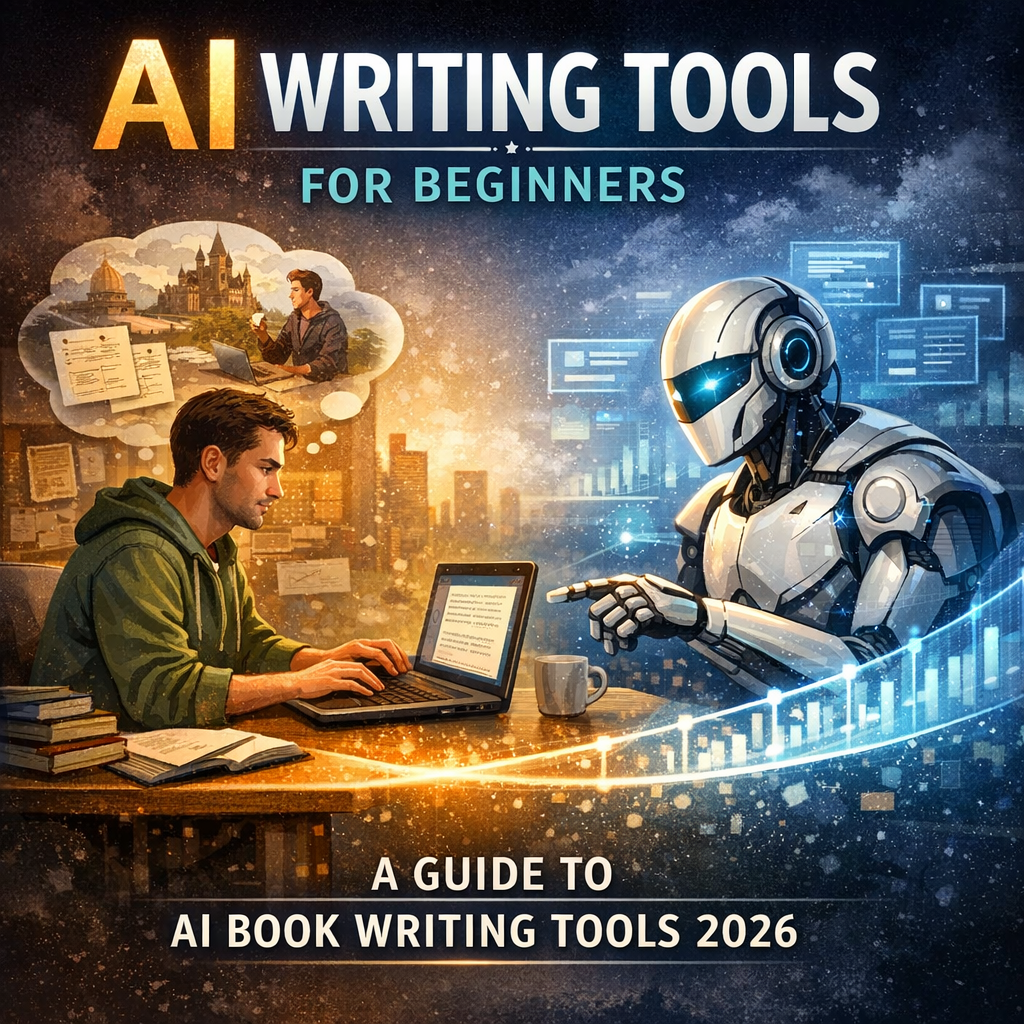
This isn't a post about replacing your voice with a machine. If you've spent any time in writing communities, you've heard that fear — and it's worth addressing head-on. The best AI writing tools don't write for you. They write with you. They handle the scaffolding so you can focus on the architecture. And for beginners especially, that distinction makes all the difference.
Let's walk through what these tools actually do, which ones are worth your time, and how to use them without losing the thing that makes your writing yours.
The Numbers Behind the Shift
Before diving into specific tools, it helps to understand the scale of what's happening. The AI writing assistant market reached approximately $91 billion in 2025 and is projected to climb to nearly $116 billion this year. That growth isn't driven by corporations alone — individual writers, freelancers, and first-time authors are a major part of the expansion.
Content creators have adopted AI tools at one of the highest rates of any profession, and that adoption is accelerating. The writers finding the most value aren't the ones asking AI to do the work for them. They're the ones using these tools to move past the obstacles that kept them stuck for months or years.
For aspiring writers, that's the real opportunity. Not a shortcut — a scaffolding system.
Why Aspiring Writers Struggle (and How AI Actually Helps)
Every experienced author will tell you the same thing: the hardest part of writing isn't the writing. It's everything that surrounds it — the planning, the structure, the consistency, the sheer endurance of finishing something long.
Beginners tend to hit the same walls. The opening chapter takes three months because every sentence feels permanent. Characters drift out of voice by chapter four because there's no reference system in place. The plot sounded brilliant in the shower but collapses under the weight of its own logic when you try to outline it.
AI writing tools address these friction points directly. They don't eliminate the creative challenge — they reduce the logistical burden. Think of them less like a ghostwriter and more like a very patient writing partner who never gets tired of brainstorming with you at 2 a.m.
Choosing the Right Tool for the Right Job
Not all AI writing tools serve the same purpose, and picking the wrong one is where many beginners get frustrated. A tool designed for marketing copy will produce stilted, unnatural prose if you try to write fiction with it. A creative writing tool won't help you with SEO if you're blogging.
Here's how the landscape breaks down for aspiring writers in 2026.
For Fiction and Long-Form Storytelling
If you're writing a novel, short story collection, or any form of narrative fiction, you need a tool that understands story structure — not just sentence construction. The difference matters enormously.
General-purpose AI assistants can generate passable prose, but they tend to lose track of characters, forget plot points, and shift voice without warning over longer works. Purpose-built fiction tools solve this by maintaining what's essentially a living reference document — your characters, your world, your rules — and feeding that context into every interaction.
Structured workflows that enforce an outline-first approach are particularly valuable for beginners. They prevent the most common failure mode in first novels: writing yourself into a corner because you started with chapter one and no map.
For Blog Writing and Content Creation
If your writing goals lean toward blogging, newsletters, or online content, the tool landscape looks different. Here, SEO integration matters. The ability to research keywords, analyze competitors, and structure content for both readers and search engines saves hours of manual work.
The best blog-focused tools combine keyword analysis with actual writing assistance — helping you structure an article, generate headlines, and maintain readability throughout. For aspiring writers building an audience, this combination of craft and discoverability is essential.
For Poetry, Essays, and Short-Form Work
Shorter forms require a lighter touch from AI. You don't need a full story bible for a poem. What you need is a tool that can help you explore language, suggest unexpected word choices, and offer feedback on rhythm and structure without overwriting your voice.
For essays, the most useful AI function is often organizational — helping you map your argument, identify gaps in your reasoning, and restructure sections that aren't flowing. The actual prose should remain yours.
The "Will AI Replace Writers?" Question (Answered Plainly)
Let's address the elephant in the room, because it's the question that keeps many aspiring writers from even trying these tools.
No. AI will not replace writers. But writers who understand AI will have a significant advantage over those who don't — not because AI writes better than humans, but because it removes bottlenecks that slow humans down.
Consider the data: professionals using AI writing tools report saving roughly 2.2 hours per week. For a beginning novelist working evenings and weekends, that's the difference between finishing a draft in eight months versus twelve. It's not about quality — it's about momentum.
The writers most at risk aren't the ones using AI. They're the ones who spend so long on logistics — outlining, consistency-checking, restructuring — that they never get to the actual storytelling.
Five Principles for Using AI Tools Without Losing Your Voice
This is where most "best AI tools" articles stop. They give you a list and wish you luck. But for aspiring writers, how you use these tools matters far more than which ones you pick. Here are the principles that separate productive AI-assisted writing from soulless generated content.
First, use AI for structure, not for voice. Let the tool help you outline, organize, and maintain consistency. Write the actual sentences yourself, especially in the beginning. Your voice develops through practice — you can't outsource that.
Second, treat AI output as a first draft, never a final one. Everything an AI generates is raw material. Your job is to rewrite, reshape, and refine until it sounds like you. If you're publishing AI output without significant revision, you're not writing — you're curating.
Third, build your reference systems early. If your tool supports character profiles, world-building documents, or style guides, invest time in building them before you start writing prose. The more context your AI partner has, the more useful its suggestions become.
Fourth, set boundaries on what you delegate. Decide in advance which parts of the process you want AI help with and which parts you want to handle alone. Some writers use AI for brainstorming but never for drafting. Others use it for first drafts but do all revision manually. There's no right answer — but having a clear answer keeps you in control.
Fifth, read widely and write regularly, regardless of the tool. AI accelerates your process, but it doesn't replace the foundational work of developing taste, building discipline, and learning what good writing feels like from the inside. The writers who get the most from AI tools are the ones who were already doing the work.
What to Look for When Evaluating a Tool
If you're an aspiring writer evaluating AI tools for the first time, here's a practical checklist beyond the feature lists and pricing pages.
Context retention matters more than raw output quality. A tool that remembers your characters and plot is infinitely more useful than one that writes prettier sentences but forgets everything between sessions.
Workflow structure is a feature, not a constraint. Tools that enforce an outline-to-prose progression aren't limiting your creativity — they're protecting you from the structural collapse that kills most first manuscripts.
Credit-based pricing can work in your favor. Many tools charge based on usage rather than flat monthly fees, which means you only pay for what you use. For beginners who write in bursts rather than daily, this model is often more economical.
Integration with your existing process matters. If you already write in a specific app, look for AI tools that complement that workflow rather than replacing it entirely. The best tool is the one you'll actually use consistently.
The Real Advantage: Finishing What You Start
Here's the truth that doesn't fit neatly into a feature comparison: the single biggest advantage AI writing tools offer aspiring writers isn't better prose, smarter outlines, or faster drafting. It's completion.
Most aspiring writers have started multiple projects. Very few have finished one. The obstacles that stop people — structural confusion, character inconsistency, losing momentum during the messy middle, not knowing if the plot actually works — are precisely the problems that AI tools are best at solving.
You still have to do the creative work. You still have to sit down, make decisions, and push through the resistance that comes with any meaningful project. But you don't have to do it alone, and you don't have to do it without a safety net.
The story you've been carrying around deserves to exist outside your head. The tools to help you get it there have never been better or more accessible.
It's time to start writing.
Primary keyword: AI writing tools for beginners | Secondary keyword: AI book writing tools 2026